
Tobi Sanni · AI evaluation & technical operations

Engineering judgment for AI-assisted work.

I’m Tobi Sanni, a mechanical engineering graduate with commercial solar and storage development experience at PowerFlex and Standard Solar. My work spans technical requirements, engineering handoffs and building automated workflows. I bring that experience to evaluating AI outputs, reviewing system behavior and improving technical operations.

Rockville, Maryland · Open to flexible and part-time opportunities

Tobi Sanni wearing a navy suit outdoors.
Tobi SanniEngineering & AI evaluation

Experience

Grounded in engineering

Commercial solar and storage development: technical requirements, utilities, permitting, vendors and engineering handoffs.

Dec 2024 – Sep 2026

PowerFlex

Development Engineer II, Solar and Storage

  • Managed technical development of a 60-project commercial solar and storage portfolio across six states, coordinating feasibility, interconnection, permitting, vendors and engineering handoffs.
  • Coordinated utility studies and deficiency resolution across eight utilities; prepared 11+ engineering handoff packages.
  • Built email automation workflows with Microsoft Teams synchronization and API-based information retrieval alongside core engineering work. See the workflow case study

Mar 2023 – Nov 2024

Standard Solar

Associate Development Engineer

  • Prepared initial 30% design drawings for 100+ photovoltaic systems, including site layouts and supporting calculations.
  • Tracked initial interconnection applications for 40 projects across six utilities; supported system modeling, site visits and code-related calculations.

2020 – 2022

Research, testing and solar design

Internships

  • Standard Solar, PV Engineering Intern
  • U.S. Food and Drug Administration, ORISE Engineering Intern
  • University of Maryland, Undergraduate Research Intern

Education

  • B.S. Mechanical Engineering, University of Maryland, College Park, 2022
  • A.S. Mechanical Engineering, Prince George’s Community College, 2020

Skills

  • Requirements analysis
  • AI output evaluation
  • Technical documentation
  • Quantitative analysis
  • Excel
  • PowerPoint
  • AutoCAD
  • Solar layout and energy modeling
  • Python (beginner)

Responsibilities & collaboration

I lead requirements and evaluation, with AI agents supporting software implementation.

My responsibilities

  • Author requirements and acceptance criteria
  • Provide engineering and domain context
  • Evaluate outputs against the specification
  • Flag discrepancies and direct revisions

AI-assisted implementation

  • Generate code from written specifications
  • Implement revisions in response to review findings

I evaluate the resulting behavior against the requirements and direct further revisions.

Work

Case studies

Engineering workflows and a featured software project show how I define requirements, evaluate AI-assisted outputs and direct revisions. Additional examples sit below.

01PowerFlexProfessional experienceWorkflow automation

Engineering operations & AI-assisted workflows

Building workflows around the practical needs of an engineering team.

Alongside solar and storage development at PowerFlex, I built email automation workflows with Microsoft Teams synchronization and API-based information retrieval. This work addressed repetitive coordination and information-handling tasks within the team.

My role
Engineering context, workflow requirements, AI-assisted development and output review
Systems built
Email automation workflows connecting team communication and information retrieval
Further work
Development of additional internal AI tools to address team inefficiencies; implementation details remain confidential
Review focus
Whether workflow outputs meet the team’s requirements and provide useful information for human review

Workflow automation

  1. Email workflows
  2. API-based information retrieval
  3. Microsoft Teams synchronization

Engineering research

  1. Interconnection requirements
  2. AI-assisted research
  3. Human review
Illustrative summaryNot an internal system diagramNo company or client data shown
Read the case notes

Built workflows

I built email automation workflows that synchronized with Microsoft Teams and retrieved information through APIs. I also developed a human-reviewed workflow for researching interconnection requirements and presented practical AI workflows to colleagues in July 2026.

Work in progress

I was developing additional internal AI tools to address team inefficiencies. A separate preliminary single-line-diagram generator remained unfinished. That unfinished drawing tool does not describe the status of the automation workflows already built.

Confidentiality and scope

Internal tool designs, source code, messages, API details, employer and client drawings, project identities and internal documents remain private. This summary does not claim company endorsement, organization-wide adoption or measured time savings. Any preliminary engineering drawing requires qualified review.
02Featured software projectIndependentOngoing

Tickmason

Defining system behavior and evaluating an AI-built application.

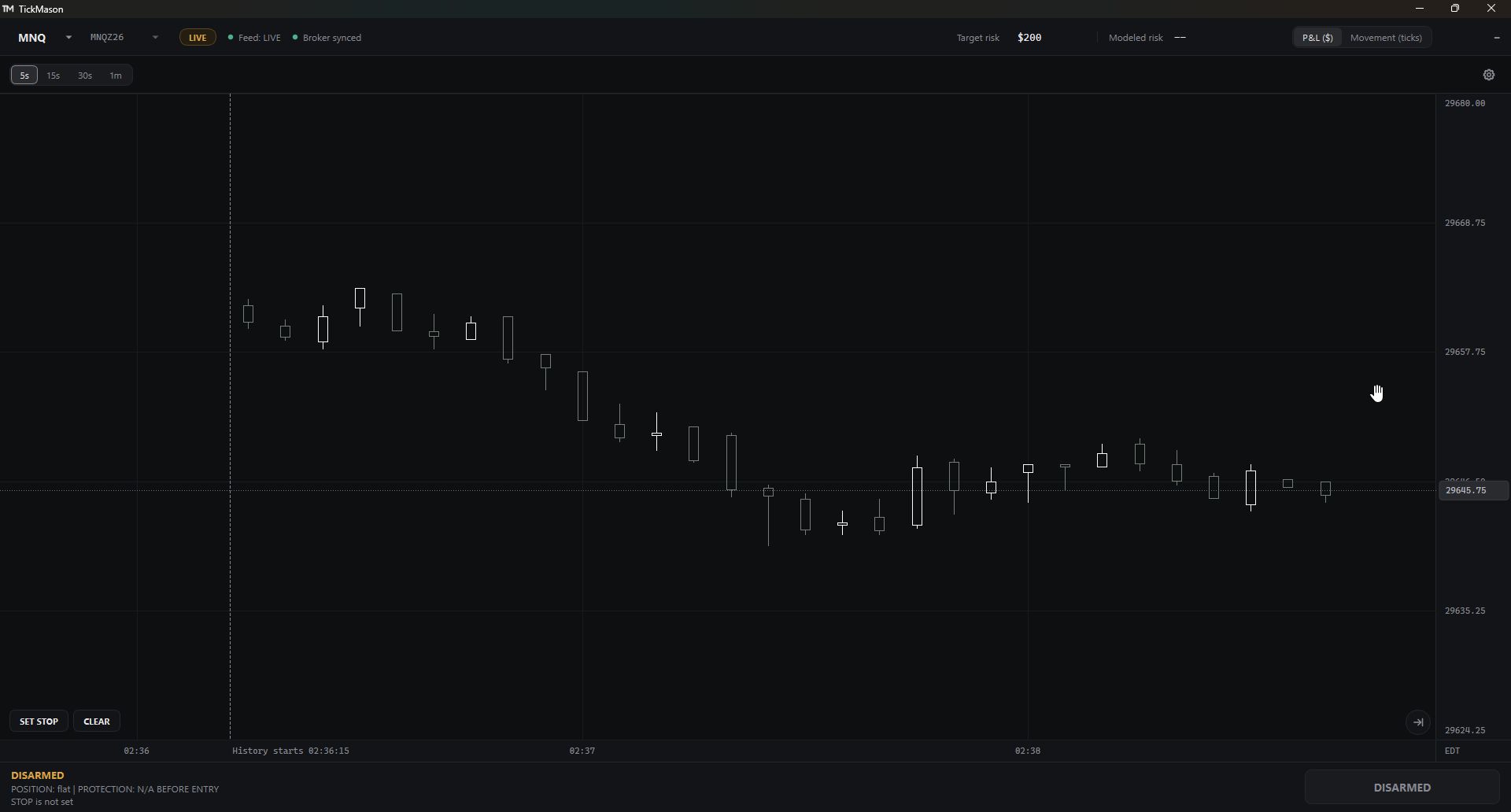
Actual application captureBlack-and-white chart settings MNQ market data in the normal desktop application, captured October 20, 2026. Five-second candles; application disarmed. No order was placed for this capture.
Tick Mason with a black background and white outlined five-second MNQ candles. The top bar reads Feed LIVE and Broker synced. The bottom shows DISARMED, POSITION flat and STOP is not set.

Original desktop capture · Personal chart settingsView full-size application (JPG)

RequirementWhen broker state is unknown, the interface must say so plainly and must not suggest that placing an order is safe.

Tickmason is a local application for futures execution. I define its requirements, chart interactions and risk-sizing workflow, then evaluate the AI-built implementation against that specification. The case study focuses on clear state feedback, explicit user actions and reviewable behavior.

My role
Requirements, workflow decisions, output review and revision direction
AI agents
Perform the coding
Review focus
Clear state feedback, explicit user actions, consistent sizing behavior, handling of an unknown broker state
Not claimed
Executed trades, trading returns or commercial readiness

My review responsibilities

  1. State feedback: review how the interface distinguishes known, missing and uncertain account information.
  2. Chart workflow: define the stop-placement and risk-sizing interactions.
  3. Acceptance: compare implementation evidence with the requirements and direct corrections.
Read the case notes

The challenge

An interface can look ready while its underlying account state is uncertain. The requirement is to communicate that uncertainty clearly and to stop the screen from suggesting that an action is safe.

The review

I specify the expected behavior, inspect the resulting interface and evidence, flag discrepancies and direct revisions. The review includes entry restrictions when broker state is unknown.

Evidence and limits

Local project documentation and an actual application capture support this description. The normal launcher was opened with existing settings; the chart displayed changing market data, Feed LIVE and Broker synced. The application remained disarmed and no order was placed for the capture. These visible status labels do not independently verify execution behavior, trading returns or commercial readiness.

Additional independent work

Supporting examples

Two smaller examples of specification writing, data-quality investigation and visual output review in trading-related projects.

03Data quality & research operations

ENIGMA

I write requirements and acceptance criteria for an ongoing futures research and automation project. My review includes data gaps, provenance and consistency across futures contracts.

Review approach & scope

I coordinate AI-assisted implementation, compare outputs with the written specification, flag discrepancies and direct revisions. I keep implemented behavior, passing tests and accepted outcomes separate.

Private project records support this summary. Research rules and source code remain private. No research performance or completed project acceptance is claimed.

04Visual output evaluation

Pine Script indicators

I define chart-tool requirements and review AI-assisted revisions for Time and Price and SMT indicators, checking whether overlays and settings match the intended behavior.

View chart evidence & scope

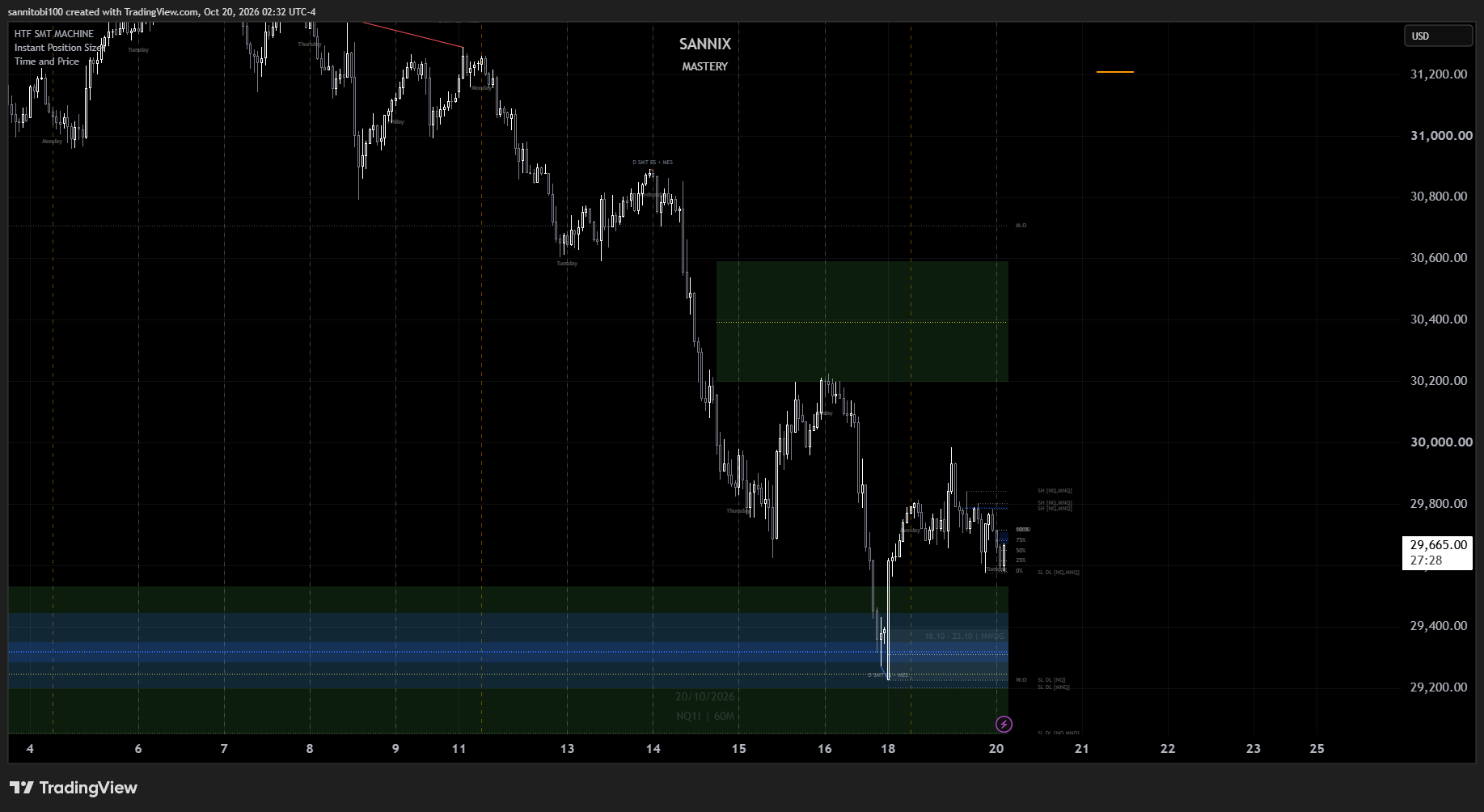
Local Pine Script v6 sources and my TradingView capture support this example. HTF SMT MACHINE and Time and Price are visibly listed. Instant Position Sizer also appears; authorship of that tool is not claimed. The screenshot illustrates output, not source correctness or profitability. Scripts and research rules remain private.

TradingView chart capturePrivate indicators HTF SMT MACHINE and Time and Price are visible in the indicator list. The screenshot shows chart output; the scripts and research rules remain private.
User-provided TradingView chart with white candlesticks on black, colored zones and labels. The indicator list names HTF SMT MACHINE, Instant Position Sizer, and Time and Price.

Provided by Tobi · TradingView export dated October 20, 2026View full-size chart (PNG)

Approach

How I review AI output

I’m interested in the work between a promising output and a result someone can rely on.

  1. Give the model a real task

    State the purpose, constraints and expected behavior before implementation starts.

  2. Check the output against evidence

    Inspect discrepancies, trace inputs and direct revisions. Keep missing evidence visible.

  3. Record what is actually known

    Keep a working prototype, a passing test and an accepted outcome separate.

Contact

Have an AI workflow that needs careful review?

I’m looking for AI evaluation, human-reviewed AI workflow, technical operations and engineering roles, including flexible and part-time work. Send a short note about the role and the kind of review involved.